> For the complete documentation index, see [llms.txt](https://help.aikido.dev/llms.txt). Markdown versions of documentation pages are available by appending `.md` to page URLs; this page is available as [Markdown](https://help.aikido.dev/docs/docs-ja/reby/configure-deep-review.md).
# Deep Reviewを構成する
PR Checks から 1 つ以上のリポジトリで Deep Review を有効にします。有効化したら、各リポジトリの設定で厳しさレベルを選択し、 [関連リポジトリをリンクできます](/docs/docs-ja/reby/link-repositories.md).
Deep Review はセキュリティレビューと同じゲーティング設定を使用します。個別の失敗しきい値はありません。
{% hint style="info" %}
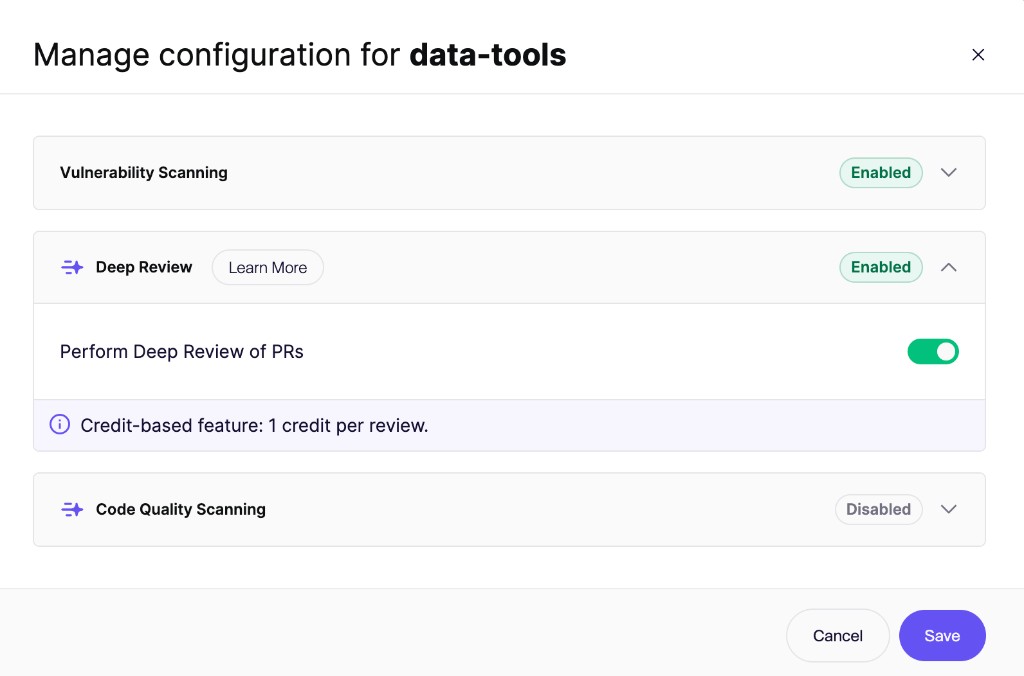
Deep Review の料金は **プルリクエスト 1 件につき 1 クレジット**。同じPRに対する追加レビューには追加料金はかかりません。
{% endhint %}
## Deep Review を有効にする
{% stepper %}
{% step %}
### PR Checks を開く
その後、Splunk Cloud と Splunk Enterprise の両方でトークンを作成します: **リポジトリ > Pull/Merge Requests > PR/MR チェックを管理**。また、開くこともできます [PR/MRチェックを管理](https://app.aikido.dev/repositories/prs) を直接アップロードします。
{% endstep %}
{% step %}
### リポジトリを選択する
1 つ以上のリポジトリを選択します。一括で有効にするには、設定したいすべてのリポジトリを選択し、次にクリックします **「PR スキャンを設定」** を一括操作バーで。
{% endstep %}
{% step %}
### Deep Review をオンにする
レポートの行で **ディープレビュー** セクションでオンにし、 **PR に対して Deep Review を実行**.
{% endstep %}
{% step %}
### 変更を保存する
クリック **「Save」**。Aikido は、選択したリポジトリの今後のプルリクエストをレビューします。
{% endstep %}
{% endstepper %}
## PR チェックのゲーティング
Deep Review は、そのリポジトリのセキュリティレビューのゲーティング設定に従います。これらの設定は、 **脆弱性スキャン** 同じ PR Checks モーダルのセクションで変更してください。
その **のスキャン失敗について** しきい値は次にも適用されます **Aikido Security: Deep Review** チェック:
* しきい値以上の検出結果は Deep Review チェックに失敗します。
* しきい値未満の検出結果も引き続き報告され、コメントされますが、チェックは失敗しません。
* **常に合格** Deep Review チェックをグリーンのままに保ちます。Aikido は引き続き PR をレビューし、コメントを投稿します。
もし **PR チェックを常にグリーンにする** ワークスペースで有効になっている場合、Deep Review チェックもグリーンのままになります。
参照 [PRゲーティングの概要](/docs/docs-ja/prtorirsugtingu/aikido-ci-gating-functionality.md) 失敗しきい値の設定方法について。
## リポジトリの Deep Review 設定を開く
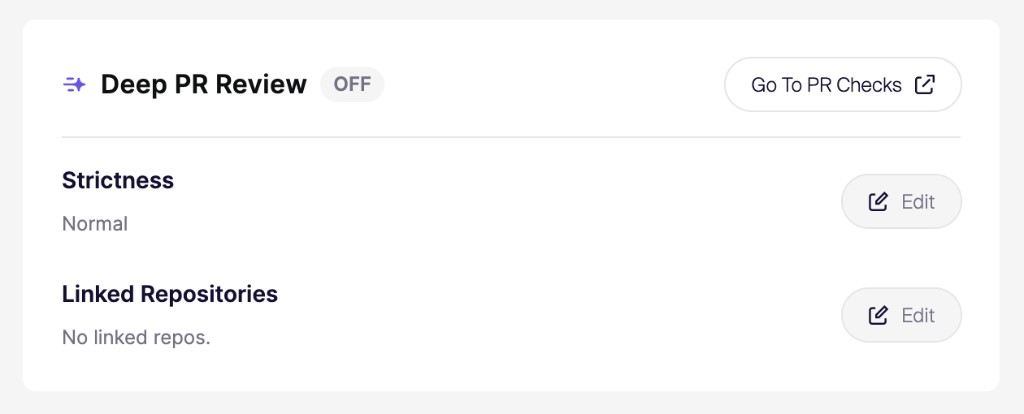
厳しさとリンク済みリポジトリは、リポジトリごとに個別に設定されます:
1. 開く [**リポジトリ**](https://app.aikido.dev/repositories) 、設定したいリポジトリを選択します。
2. その **リポジトリ設定**.
3. を探し、 **Deep PR Review** カード。
4. クリック **「編集」** の横の **厳しさ** または **リンク済みリポジトリ**.
## 厳しさレベルを選択してください
厳しさによって、Deep Review がどれだけフィードバックを投稿するかが決まります:
* **ゆるめ**:レビューを絞り込み、コメント数を少なくします。
* **標準**:バランスの取れたカバー範囲を提供し、レビュー担当者を圧倒しません。
* **積極的**:より多くの潜在的な問題や改善点を指摘するため、コメント数が増えます。
## パスとファイルを除外
Aikido はすでに、依存関係フォルダ、ビルド出力、生成ファイル、ロックファイル、バイナリ、メディアを含む多数のパスを標準で無視しています。さらに多くのパスは [`.aikido` ファイル](/docs/docs-ja/kdosukyan/scanning-practices/ignore-via-code-with-aikido-files.md)。プルリクエストが除外されたファイルのみを変更している場合、Aikido はレビューをスキップし、料金は発生しません。
参照 [Deep Review の仕組み](/docs/docs-ja/reby/how-deep-review-works.md#exclude-paths-and-files) 詳細について。
## クレジット
Deep Review の料金は **プルリクエスト 1 件につき 1 クレジット**.
同じ PR に対する追加レビュー(たとえば新しいコミット後)では追加クレジットは消費されません。クレジットはコミットごとや個々のレビュー実行ごとではなく、PR ごとに課金されます。詳しくは [Aikido クレジット](/docs/docs-ja/miscellaneous-info/wallet-and-credits.md).
{% hint style="info" %}
チームで Deep Review を使うといくらかかるか気になりますか?
当社の [見積もりツール](https://app.aikido.dev/repositories/deep-review) は、直近 30 日間の利用状況に基づいて目安を示します。
{% endhint %}
## 月間支出上限を設定する
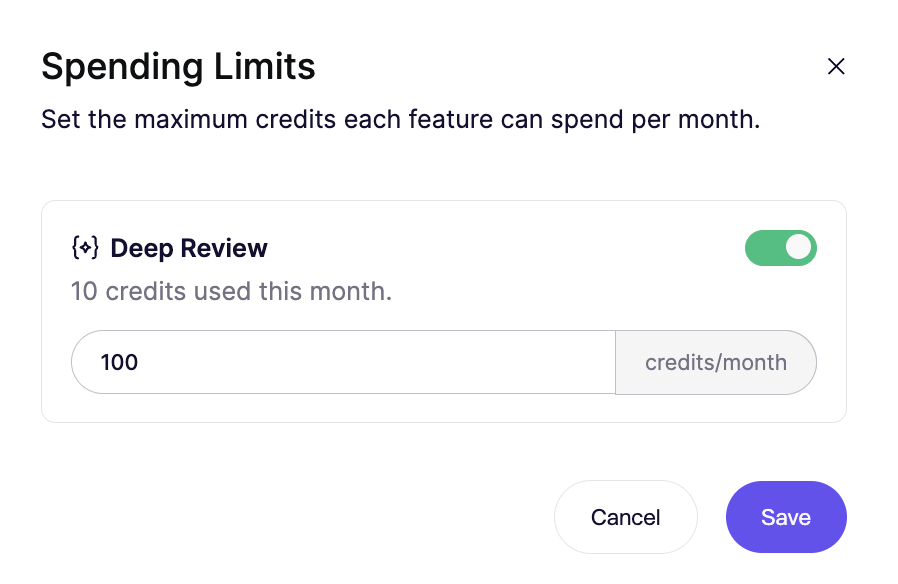
ワークスペース管理者は、次から Deep Review の支出上限を設定できます: [ウォレット設定](https://app.aikido.dev/settings/wallet/settings).
{% stepper %}
{% step %}
### ウォレット設定を開く
その後、Splunk Cloud と Splunk Enterprise の両方でトークンを作成します: [ウォレット設定](https://app.aikido.dev/settings/wallet/settings)。また、開くこともできます **組織設定** に移動し、 **ウォレットを管理**.
{% endstep %}
{% step %}
### Deep Review の上限を設定する
クリック **上限を設定**。次をオンにし、 **ディープレビュー** トグルをオンにし、 **クレジット/月** 上限を設定し、次をクリックします **保存**.
{% endstep %}
{% endstepper %}
使用量が上限に達すると、Aikido は次の暦月まで、クレジットを消費する Deep Review をスキップします。同じ PR に対する追加レビューは引き続き実行されます。
月間上限を設定したくない場合は、トグルをオフにしてください。
---
# Agent Instructions
This documentation is published with GitBook. GitBook is the documentation platform designed so that both humans and AI agents can read, navigate, and reason over technical content effectively. Learn more at gitbook.com.
## Querying This Documentation
If you need additional information that is not directly available in this page, you can query the documentation dynamically by asking a question.
Perform an HTTP GET request on the current page URL with the `ask` query parameter, and the optional `goal` query parameter:
```
GET https://help.aikido.dev/docs/docs-ja/reby/configure-deep-review.md?ask=&goal=
```
`ask` is the immediate question: it should be specific, self-contained, and written in natural language.
`goal` is optional and describes the broader end goal you are ultimately trying to accomplish on behalf of the user. GitBook uses it to tailor the answer towards what is most useful for that goal.
The response will contain a direct answer to the question and relevant excerpts and sources from the documentation.
Use this mechanism when the answer is not explicitly present in the current page, you need clarification or additional context, or you want to retrieve related documentation sections.